home page >> building process >> this page
A non-profit corporation established in 1967, The Center for Environmental Structure (CES) implements building projects in which towns, landscape, buildings, gardens, are truly adapted to support human existence.
CES provides publicly accessible models of working processes able to alter the procurement of buildings throughout the world.

We seek to do this in a fashion which permits the creation of a better architecture and provides professional and lay people with working models for new projects in the twenty-first century. Pilot projects of small and moderate size are gradually to be replaced by projects in which size, scale, and impact increase, and are able to be competitive with those very large projects which are now damaging cities and countryside everywhere, in the United States, in the European world, in Latin America, in Asia, and in Africa. The projects we take on have as an explicit aim, the purpose of extending tested mechanisms and processes of implementation to larger and larger cases which can, within a finite time, begin to have impact on the conduct of architecture and planning in the world.
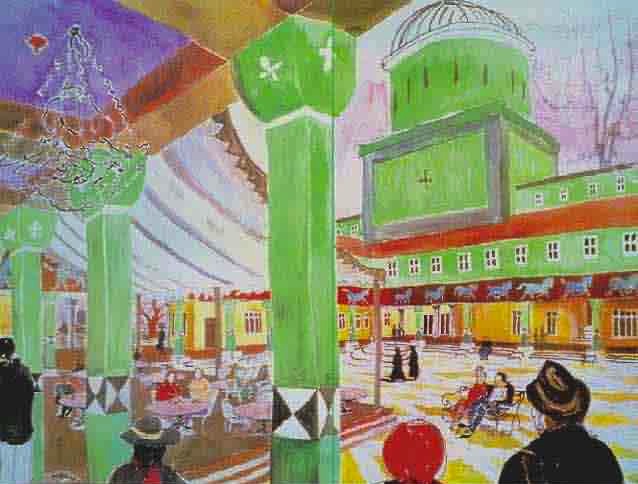
Fundamental to our aims, is the fostering of a certain quality in the built environment. For convenience, we call this quality life. In a living environment, as we wish to define it, the people who live and work there are relaxed, know that they belong there and enjoy a kind of freedom in relation to the buildings and space around them. They feel and are "at home" in their world.
In looking around us we can most frequently see this quality in traditional buildings and towns, where, over the years, people have constructed an orderly but loose configuration of space, rooms, gardens, houses, and larger buildings. The later 20th century, for varied and complex reasons, has not seen much in the way of living buildings and neighborhoods.
The idea of CES is not to engage in a nostalgia for past centuries, but to develop a modern interpretation of living structures that can speak to us, our cultural specificity, and to our times, and yet reach this deep understanding of spatial arrangements that support rather than deny humanity and ordinary daily events.
Many ingredients are required to make a living structure: an understanding of space and human response to it, appropriate technology and materials, constructing, from the outset, with and for the people who will adopt that space as their own, and even arranging for the way that money flows for initial construction, later repairs, adaptation, and growth. The key for CES is in understanding and developing the processes by which living environments can come into existence and prosper.
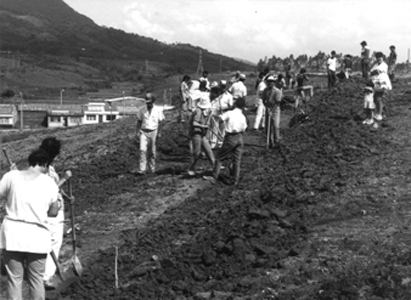
We believe that people have a right to determine and shape their own environment. We also believe that they know more details, necessary to the creation of a good environment, and that good architecture can only come from wholehearted involvement of the users in the shaping of their buildings and streets.
CES has a long standing commitment to the particular human qualities that make each country, each people, each region unique, and has wide experience in cooperation and in paying attention to the subtlety of human value as it arises in different contexts.
Since 1967, CES has had wide-ranging experiences of participation in different countries, and in working with peoples of different cultural and ethnic background, and with people of a wide range of different income levels. Please see below for examples of people with whom we have worked.
The most fundamental aspect of CES innovation and practice, concerns the necessity to revise and reconstruct social, technical, banking, and human process, throughout the field of building and environment.
We are committed to the view that a good, healthy, and beneficial environment for human beings in the 21st century, can only be created by thoroughgoing changes in the systems and processes in use during the 20th century.
During the last thirty years we have frequently proposed, and made, innovations of process. At one time or another, we have proposed changes in almost all the processes that create buildings, because for over thirty years we have tried to identify the kinds of process that are capable of creating a living world. Some of our process innovations include:
These innovations have all been innovations of process. We made them because we knew the value of the living architecture we were trying to achieve was dependent on changes in process, and could only be created by these or other equivalent process changes. These process-innovations were often dismissed as dreaming, as not essential, as too radical for architects to propose. Nevertheless, experience has taught us that fundamental practical innovations of process are necessary consequences of thinking correctly about the nature of life, and of facing honestly the task of creating living structure in the world.
As part of CES efforts to make better, low-cost housing and public buildings, a wide variety of technical innovations have been introduced. Innovations include:
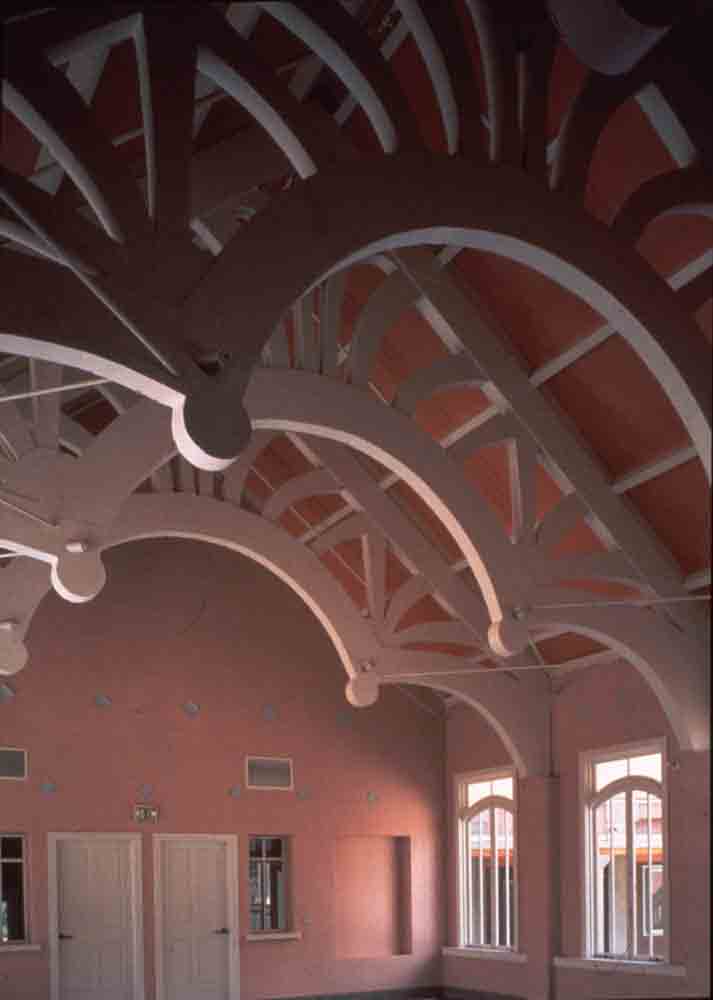
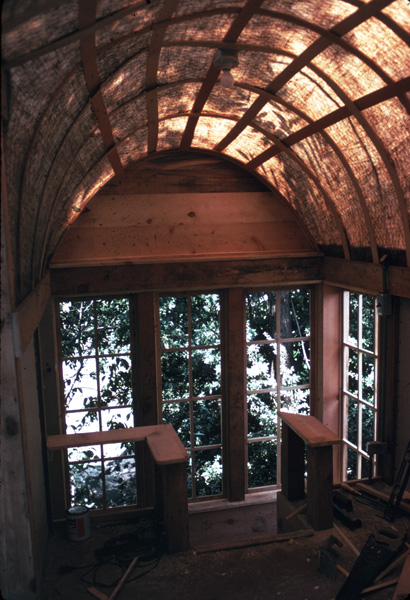
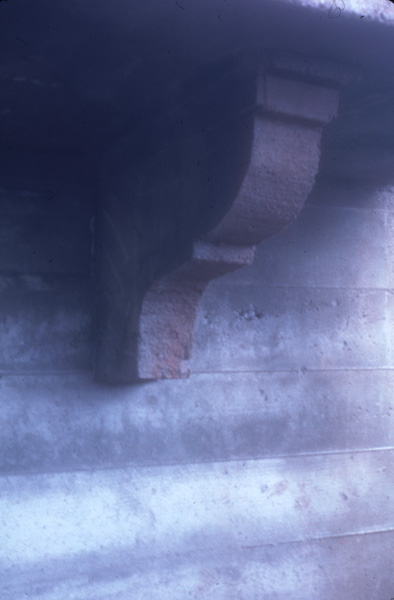
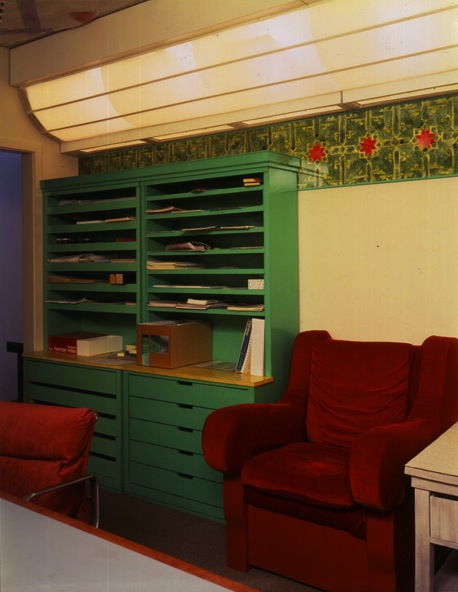
A major part of CES work during the last 20 years, has been aimed at cost control. New forms of construction management contracts, invented and developed by CES, have provided managed methods of cost control which provide the client the opportunity to obtain maximum benefit for any given level of cost, with security of final cost.
Vital to the welfare of the environment, is the possibility of flexible adaptations during construction, and methods of providing that this flexibility can be maintained within a guaranteed cost umbrella. Our innovations provide clients with the advantages of flexibility, without the costs and penalties and cost-overruns typically encountered when construction proceeds within existing forms of bidding and cost control.
Direct control of subcontractors, who are required to provide bids working to a pre-fixed sum, while being permitted to vary the specification of what is delivered. This form of program budgeting is efficient, highly cost-effective, and creates a better relationship with subcontractors, removing the antagonistic relation that exists under existing frameworks, yet creating large cost advantages for clients.
New ultra-low-cost construction techniques and new attitudes combine cost-effectiveness, with maximum benefit per unit of cost to the human considerations in the environment.
New forms of cash flow for housing programs that are based, in part, on available resources, may be used to maximize the effect of available cash flow, while keeping client expectations at a minimum, reduce later burdens caused by loan indebtedness.
Experiments are now under way to encourage mixed use development, through creative forms of variable interest, thus assigning priorities and different forms of cost to components, according to their level of social importance. This has the effect of recovering key components of the urban environment, which are damaged by present types of interest structure.
In many projects CES combines with engineering professionals of other disciplines and provides a wholly innovative and integrated planning design and construction service; it also frequently engages with other architectural firms. Here are some the professional organizations we have worked with.
Some of our better known clients:
Countries and people we have worked with:
The Center for Environmental Structure is registered in the United States as a non-profit corporation of planners, architects, engineers and contractors. C.E.S. was founded in 1967.
President: Christopher Alexander
Board of Trustees: Maggie Moore Alexander, Artemis Anninou, Lily Alexander
Web Master: Sophie Alexander